
Backyards around Charlotte rarely stay empty for long. Mild winters linger gently. Spring shows up early. Summer evenings stay warm well past sunset. Because of this climate rhythm, outdoor space often becomes an extension of daily living rather than a forgotten patch of turf.
Yet many properties across Charlotte started with little planning. Builders installed grass, maybe a small patio, then moved on. The result often feels unfinished. A lawn like that holds potential, though. With careful landscaping design, a basic backyard slowly evolves into something practical and inviting.
Picture a quiet seating corner beneath shade trees. Maybe a stone patio for gatherings. Paths that guide guests through planting beds without trampling turf. Suddenly outdoor space starts functioning like another room.
Top Gardens has worked with Charlotte lawns for years, helping transform lawns exactly like that. Proper landscape planning plays a huge role. Without thoughtful design early in a project, outdoor spaces often end up pieced together over time with mixed results.
Understanding how outdoor living landscapes actually come together can make planning easier before construction ever begins.
Table of Contents
Why Outdoor Living Landscapes Matter in Charlotte
Charlotte’s climate encourages outdoor life more than many cities. Winters rarely freeze the soil for weeks. Spring temperatures climb quickly. Fall evenings often stay pleasant long after sunset.
Because of those conditions, homeowners increasingly rethink backyard design. Grass alone no longer satisfies most families. People want outdoor areas where friends gather, children play, or quiet evenings unfold with minimal fuss.
Value matters too. Well-designed landscaping often raises property appeal significantly. Buyers tend to notice cohesive outdoor spaces immediately.
Still. Beauty alone rarely drives decisions.
Function plays an equal role. A lawn with defined zones feels organized. One area supports seating. Another handles gardening. A lawn patch remains open for activities. That balance transforms a backyard into usable living territory rather than decorative scenery.
Core Elements Found in Successful Backyard Landscapes
Every landscape looks different, of course. Yet certain components appear repeatedly across successful Charlotte lawns.
Outdoor Living Areas
Start here.
Outdoor seating spaces usually anchor the entire backyard layout. Stone patios, paver terraces, or slightly elevated deck areas create comfortable gathering spots.
Material choice matters, though layout matters even more. Seating zones should connect naturally with the nearby doors of the house. Walking paths often lead outward from that space, guiding visitors deeper into the landscape.
A patio tucked awkwardly into a corner rarely gets used.
Good placement changes everything.
Hardscape Structure and Movement
Hardscaping introduces order within landscape design. Walkways shape how people move across the lawn. Retaining walls stabilize slopes while adding visual interest.
Charlotte properties frequently feature gentle grading shifts. Clay soil compounds drainage challenges during summer storms. Structural features like steps or low retaining walls help manage those conditions while improving appearance.
Defined paths also prevent worn grass tracks from forming across the lawn.
Simple improvement. Big difference.
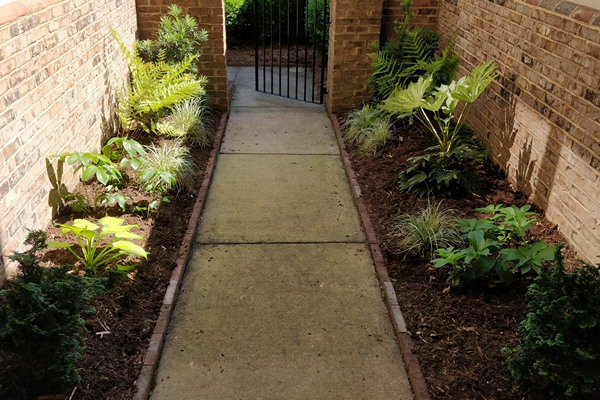
Planting Design and Garden Layers
Plants bring landscapes alive. Without greenery, even expensive patios feel sterile.
Charlotte supports a huge range of plant material. Shade trees, flowering shrubs, ornamental grasses, and perennials with long blooming cycles. Designers often layer plant heights carefully. Tall canopy trees rise above mid-height shrubs. Ground covers soften edges around paths or patios.
Layering adds depth. It also keeps landscapes interesting through multiple seasons.
Thoughtful plant spacing matters too. Small nursery plants eventually mature. Crowded beds become maintenance headaches later.
Better planning prevents that future mess.
Lawn Areas and Flexible Space
Grass still belongs in most landscapes. Not everywhere, though.
A balanced backyard includes open lawn sections for flexible use. Children play there. Dogs run around. Guests spill onto the grass during gatherings.
Too much lawn feels empty. Too little lawn creates a cramped design.
Good landscaping finds the middle ground.
Outdoor Lighting for Evening Use
Evening lighting often arrives late during project planning. Strange oversight considering how useful lighting becomes.
Soft landscape illumination highlights pathways, accent trees, or architectural details around patio areas. More importantly, lighting improves safety after dark.
Charlotte evenings remain warm through much of the year. Lighting extends usable hours dramatically.
A lawn that glows gently after sunset feels inviting.
Charlotte Climate Considerations in Landscape Design
Designing landscapes in Charlotte requires attention to regional conditions. Soil composition presents the first challenge. Much of the area contains dense clay layers, which slow drainage after heavy rain.
Summer storms occasionally dump large volumes of water in short bursts. Poor grading or weak drainage quickly leads to soggy lawn zones or water pooling near patios.
Good landscape planning addresses those issues early.
Soil preparation improves planting conditions. Organic amendments often loosen the clay structure, allowing roots deeper access. Slight grading adjustments guide water away from structures and planting beds.
Plant selection also plays a role. Species adapted to humid summers and occasional drought cycles generally thrive with less maintenance.
Landscape design becomes part horticulture, part engineering.
Backyard Layout Concepts Popular in Charlotte
Each property invites different solutions. Still, several backyard layout patterns appear often across Charlotte neighborhoods.
Entertainment-Focused Backyards
Some homeowners prioritize social gatherings. Larger patios anchor these landscapes while surrounding lawn space remains open for guests.
Plant beds usually frame the lawn perimeter rather than dominating the center space.
Clear. Spacious. Welcoming.
Garden-Centric Landscapes
Others prefer lush greenery. Curving planting beds fill the lawn with layered shrubs, grasses, and seasonal flowers. Paths wind through gardens, connecting small seating areas placed in quiet corners.
These landscapes feel immersive.
Almost park-like.
Low-Maintenance Outdoor Spaces
Busy homeowners sometimes request landscapes requiring minimal upkeep. Durable materials reduce repairs. Plant selections lean toward hardy varieties tolerant of heat or dry conditions.
Groundcovers replace portions of the lawn, reducing mowing frequency.
Simple choices save time later.
Family Friendly Lawns
Families with children often prioritize open lawn combined with shaded seating areas nearby. Plant choices avoid thorny species or fragile ornamental varieties near play zones.
Safety becomes a design priority.
Common Backyard Landscaping Mistakes
Many landscape projects begin with enthusiasm, yet little planning. Homeowners install features gradually over several seasons.
A patio first. Garden beds next year. Maybe a walkway later.
Piece-by-piece construction often creates disconnected spaces. Each addition works alone yet rarely contributes toward a unified design.
Drainage mistakes appear frequently as well. Without proper grading, water collects near structures or planting beds during heavy storms.
Another issue involves plant crowding. Young plants look tiny during installation. People plant too many. After several seasons, the beds turn into a tangled jungle.
Professional landscape planning usually prevents those problems from appearing in the first place.
Why Professional Landscape Design Helps
Experienced landscaping teams approach projects differently from typical DIY lawn upgrades.
Designers study property layout first. Sun exposure matters. Soil conditions matter. Drainage patterns matter too. Homeowner lifestyle plays an equal role in planning decisions.
Some clients want quiet garden retreats. Others prefer outdoor kitchens and gathering areas.
A clear plan emerges before any construction begins.
Installation quality matters just as much. Patios require stable base layers beneath surface materials. Plant placement must account for mature growth size. Water management systems need correct slopes and outlets.
These technical details often remain invisible once work finishes.
Yet they determine whether the landscape lasts decades or struggles after the first storm season.
Top Gardens collaborates closely with Charlotte homeowners during this planning phase. That partnership helps translate ideas into outdoor spaces that function beautifully year after year.
Transforming a Charlotte Backyard Into an Everyday Living Space
Possibility.
That word captures what many Charlotte backyards hold.
A simple lawn may evolve into something richer with thoughtful landscape design. Stone seating areas. Curving garden beds. Pathways guiding movement gently through greenery. Lawn pockets for play or relaxation.
The climate here allows outdoor enjoyment across much of the calendar year. When landscapes reflect that reality, homeowners gain an entirely new living environment just steps beyond the back door.
For anyone considering backyard improvements, consulting experienced landscape professionals can reveal options that might not seem obvious at first glance.
Sometimes, a lawn only needs vision.
And a well-crafted plan.