
We now use our backyards in a completely different way. The days of treating a home yard as nothing more than a lonely, exposed concrete slab outside the back door, a passive plot of grass, or a swing set for the kids are long gone. Homeowners in Charlotte now see their outdoor space as an integral part of their indoor space.
But when faced with an expansive backyard, a lot of homeowners make the error of dispersing components at random, putting a fire pit in one corner, a barbecue in another, and a few lawn chairs in between. The end product frequently has an unorganized, chaotic appearance and an unwelcoming structure.
Backyard zoning, sometimes referred to as “Outdoor Garden Rooms,” is a design concept that maximizes your property’s aesthetic appeal and practical usefulness.
Table of Contents
The Anatomy of a Zoned Backyard: Essential Rooms for Charlotte Lifestyles
Every square foot in a well-zoned landscape has a distinct character and is arranged logically. A personalized landscape plan usually strikes a balance between three or four key “rooms,” depending on your lifestyle, budget, and property size.
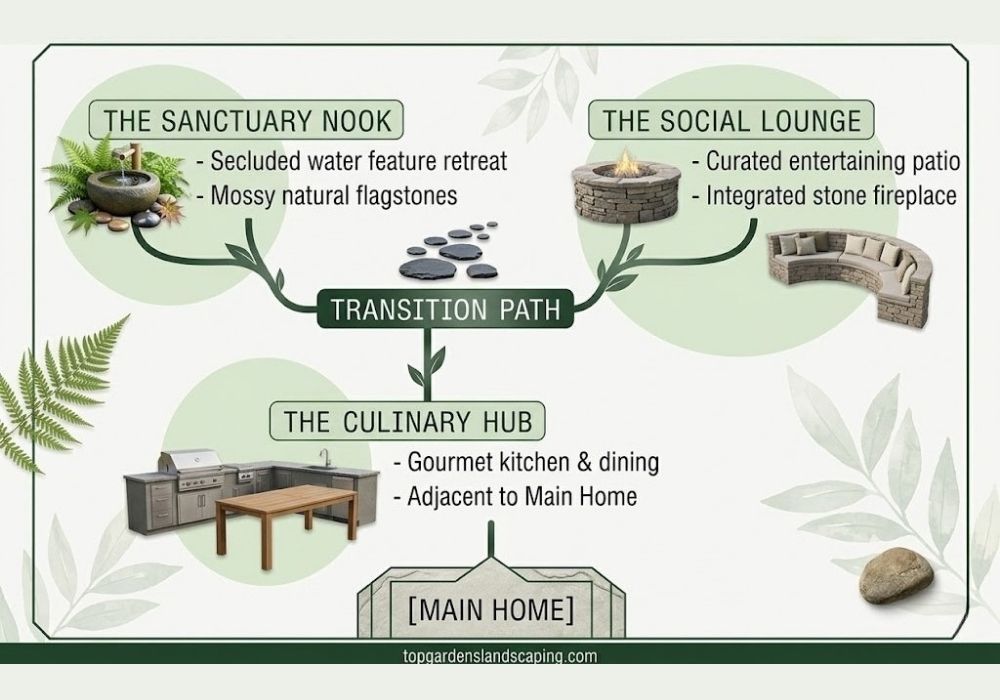
1. The Culinary Hub (The Kitchen & Dining Room)
Outdoor cooking setups work best when positioned immediately next to your back door because convenience matters. Fast access to indoor pantries makes transporting heavy food platters or iron utensils effortless. Most properties feature an island with stone countertops plus built-in grills. You should always position the primary dining table on flat hardscape surfaces to ensure structural stability.
2. The Social Lounge (The Living Room)
Main gathering zones are located farther out in your yard to maximize your entertaining footprint. These areas host large cocktail parties or long evenings with close friends. Central stone fire pits create an instant focal point on custom paver patios. Deep sectional sofas require generous clearance so people can move around safely without crowding the open flame.
3. The Sanctuary Nook (The Quiet Den)
Not every part of a modern yard requires space for massive crowds. Tucking a secluded getaway into quiet corners of the property creates a peaceful personal escape. It offers a calm spot where you can read books or drink morning coffee. These spaces value privacy over wide views by using tight flagstone footprints underneath small cedar pergolas.
How to Build Invisible Walls: Transitions That Flow
Creating separation without making the backyard feel cramped, disjointed, or boxy is the main problem of outdoor zoning. Drywall is used indoors, while minor visual signals are used outdoors to create “invisible walls.”
The Golden Rule of Outdoor Zoning: You want to define distinct boundaries while maintaining a cohesive, open-air flow across the entire property.
Professional landscape designers achieve this balance using three highly effective design tactics:
Material and Textural Shifts
Changing your flooring surface signals to your brain that you have entered a completely different room. Elegant light-grey interlocking pavers can define your modern cooking zone. Moving onto connected walkways might reveal rough natural flagstones with creeping thyme filling the joints. This shift marks a clear path toward your private sanctuary.
Subtle Grade and Level Changes
Sloping Charlotte yards offer excellent design opportunities if you embrace the natural elevation. Short stone retaining walls create distinct multi-level layouts quite easily. Elevating your social lounge just two steps above cooking zones establishes a clear visual boundary. This subtle lift separates active spaces from dining areas without blocking views.
Strategic Mid-Tier Softscaping
Plants screen views gently while framing beautiful landscape vistas. Layering soft foliage between different zones works better than building solid wooden fences. Grouping structural shrubs like Oakleaf Hydrangeas or tidy boxwoods creates a flexible living partition. Adding mid-tier Muhly Grass maintains open sightlines across your entire property.
Material Selection for a Cohesive Charlotte Aesthetic
Each outdoor space should have its own personality, but to prevent the property from seeming disorganized, they must all use the same design language. This is accomplished by carefully choosing a cohesive color scheme and materials that go well with your home’s current architectural design.
| Backyard Zone | Primary Hardscape Material | Landscape Accents | Functional Purpose |
| Culinary Hub | Smooth, large-format concrete pavers | Built-in stone veneer kitchen islands, granite counters | High-traffic cooking, seamless indoor-outdoor food prep |
| Social Lounge | Textured interlocking stone pavers | Integrated stone seat-walls, custom fire pit blocks | Large-group entertainment, multi-season evening warmth |
| Sanctuary Nook | Irregular natural flagstones or river rock | Cedar wood pergolas, dense privacy hedges, and water basins | Private relaxation, shade control, acoustic noise buffering |
Traditional Queen City homes like brick Colonials look best paired with warm earth tones. Using stacked natural stone preserves the historic charm of classic Craftsman bungalows. Modern builds benefit from clean lines or dark charcoal stone borders. Choosing sleek slate textures adds a high-end contemporary edge to newer properties.
Why Professional Layout Planning Matters
Drafting a multi-room backyard layout is highly rewarding, but executing it correctly requires deep technical expertise. DIY zoning or hiring unspecialized contractors often results in critical layout failures.
Large paver patios alter the water dynamics of your yard by creating wide, non-porous surfaces. Professional grading prevents heavy rainfall from flooding your home foundation or turning lawns into muddy swamps. Installing luxury outdoor kitchens requires running gas lines deep underground before workers lay down any stone. Expert engineering ensures utilities operate safely beneath your finished patio.
Partnering with professional design-build firms protects your investment through advanced spatial engineering. Utilizing 3D landscape modeling lets you walk through your custom garden rooms virtually before construction starts. This technology previews foot-traffic flow so you can verify material pairings early.
Reclaim Your Outdoor Living Potential
There is a lot of unrealized potential in your backyard. You may make the most of every square foot of your land by embracing the organized, opulent idea of outdoor garden rooms rather than an open, unused grass. Zoning transforms your yard into a highly practical masterpiece, whether you’re preparing a fancy dinner outside, telling stories around a stone fire pit, or retreating to a secluded, shaded haven.
Are you prepared to realize your property’s full potential? Get in touch with Top Gardens’ design and hardscape experts right now to arrange a thorough outdoor consultation and bring your unique landscape design to life.